A simple Google search will reveal the usual suspects pitching what is optimistically called enterprise AI consulting. The marketplace is crowded with voices, high-level frameworks, offers, and decks that claim big wins for enterprise outcomes. It’s legacy IT consulting with a fresh coat of paint.
But when you look closely at how complex orgs function, a deep truth becomes very obvious. They need to fundamentally change how people within their orgs function in a world that has very capable AI. And in that world, to actually initiate transformation within the operations of an enterprise, advice alone is almost always a liability. Enterprises must be ready to ask will this strategy survive a slap in the face?
They need engineering-led enterprise AI consulting, which unifies strategy with execution-grade applied AI engineering knowhow. Real insight from a technical and execution expert. Relevant advice from someone who understands how to write production-grade code, build resilient pipelines, and solve the hundred other complexities that come with AI.
It is easy to run isolated generative AI pilots/experiments or sketch flowcharts on a whiteboard. It is a completely different challenge to put roadmap items into production and deliver meaningful value.
Engineering-led enterprise AI consulting
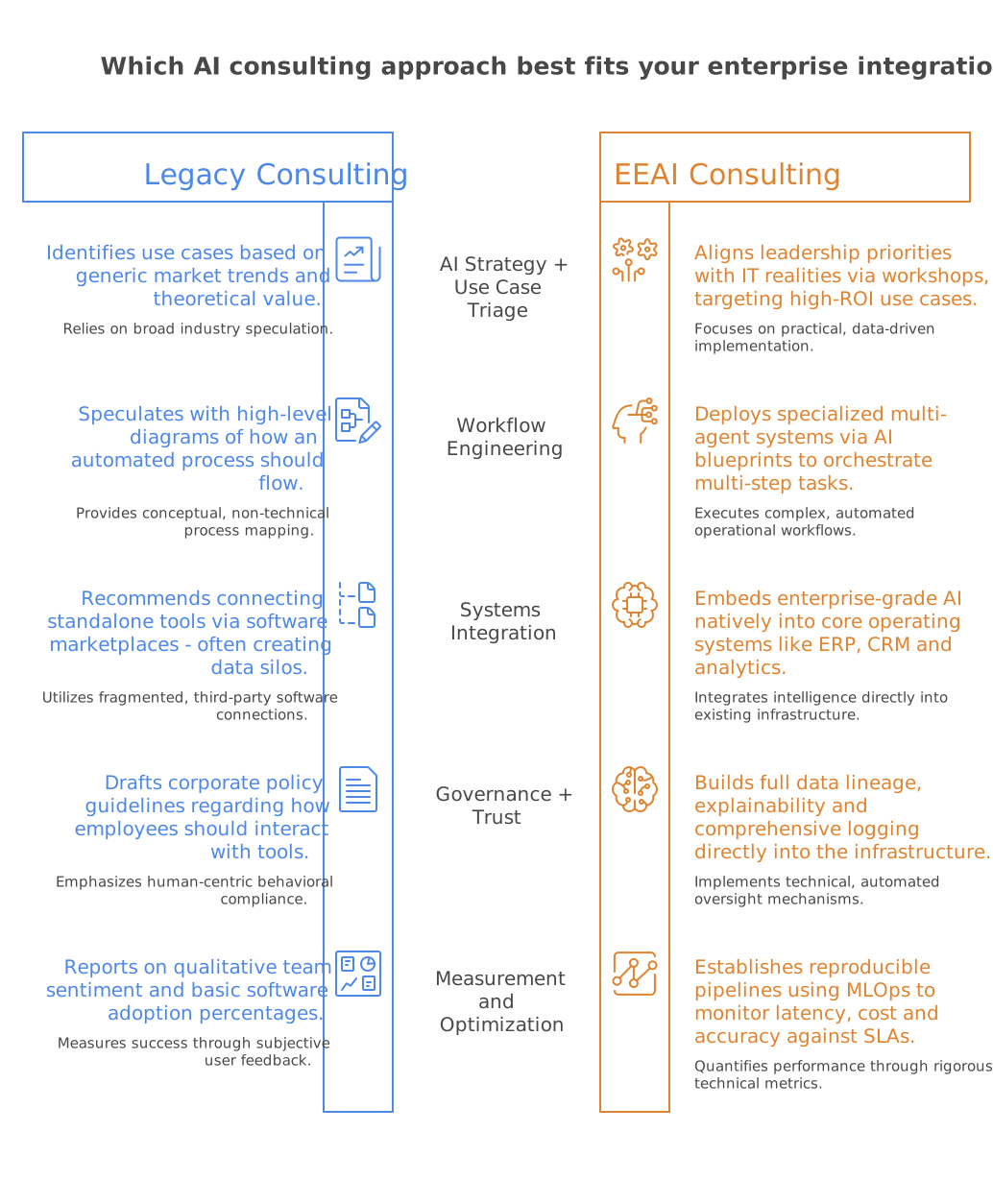
The difference between a legacy consulting firm and engineering-led enterprise AI consulting and engineering partner primarily comes down to knowing what works and, importantly, how to make AI work.
If I were to consider how intelligence integrates into an enterprise, I will break the challenge down into five distinct technical dimensions.
The trillion-dollar validation of engineering-led enterprise AI consulting
If you’re looking for a clear signal that enterprise AI consulting and services is the future, then look no further beyond the creators of the models themselves. Just in the past few weeks, frontier AI labs have realized that selling raw intelligence as a software subscription is only step one. The real proponent of enterprise adoption is deployment engineering.
The market has basically shifted into an execution-first era, signalled by massive structural moves from the industry's two main pioneers:
- OpenAI’s $4 Billion Company: OpenAI spun out the standalone OpenAI Deployment Company, backed by a massive $4 billion private equity round.
- Anthropic’s Outcome-Based Services Network: Anthropic restructured its enterprise strategy by launching a specialized services track within the Claude Partner Network.
If you look carefully, this is a big structural validation of exactly what GoML has championed. When the world’s most advanced AI labs act like advanced systems architects, it sends a definitive signal to the market that engineering execution is where true enterprise value will be realized.
Engineering sets the boundaries for enterprise AI consulting
Legacy consulting recommendations, when extrapolated to AI, tends to leave enterprise leaders with a collection of disconnected software subscriptions and fragmented environments. They find themselves with an isolated customer service chatbot, a separate document summarizer, and other clusters of features that hardly get adopted by the workforce or customers.
This creates immense friction within the org. Information becomes trapped inside independent vendor platforms. Enterprise software licenses accumulate without compounding value.
Most importantly, it introduces significant operational risk when applications are deployed without centralized harnesses, guardrails, compliance, or monitoring.
True engineering-led enterprise AI consulting looks at the problem through the lens of possibility, infrastructure, and architecture. Using structured deployment frameworks, such as GoML’s AI Matic framework, enterprises can move past prototypes reliably and with certainty that their systems are designed to be secure.

Engineering realities of enterprise AI
To turn computational models into permanent operational infrastructure, an engineering-led enterprise AI consulting partner must operate as a systems architect. Enterprise environments present strict technical constraints that simple prompt engineering cannot solve.
1. Data hygiene and pipeline architecture
Models are deeply dependent on the quality of the information feeding them. If an enterprise dataset contains duplicate records, unstructured notes or fragmented historical data, the system will simply scale that confusion. An engineering expert structurally cleanses data, establishes automated data pipelines and configures semantic search indexes - including robust retrieval-augmented generation (RAG) strategies - before any model is connected to the business.
2. Multi-agent orchestration
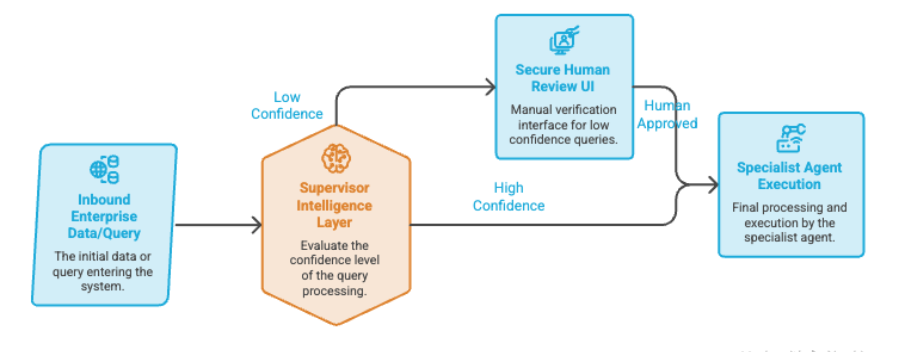
Autonomous systems require clear structural boundaries. Advanced infrastructure relies on a centralized coordinator, a supervisor agent, to manage specialized execution agents, maintain state in real time, and enforce strict operational constraints. The architecture handles the heavy lifting of processing, routing and synthesis, while seamlessly passing high-threshold exceptions to human operators at critical checkpoints.
3. Native cloud architecture
Enterprise transformation requires massive scale without vendor lock-in. Building cloud-native systems on secure, managed infrastructure, such as the AWS AI/ML stack and Amazon Bedrock, allows organizations to access multiple foundation models seamlessly. This approach ensures that data privacy is protected, infrastructure scales dynamically, and the enterprise maintains complete ownership over its workflows and system logic.
Finding an enterprise AI consulting partner
When evaluating whom to trust with the AI architecture of your company, it is useful to ask questions that reveal how a firm thinks technically. A few questions to help identify a true engineering-led enterprise AI consulting partner:
1. "Can you map out the exact exception handling framework when an automation drops an API payload or hits a model timeout?"
The insight: A technical expert will immediately discuss retry logic, automated state management and real-time error-logging infrastructure.
2. "How will our data be partitioned, and what specific guardrails prevent internal data leakage between different user access tiers?"
The insight: An engineer will talk about vector database metadata filtering, tenant isolation and strict role-based access control (RBAC) integrations.
3. "What is your methodology for tracking and mitigating semantic drift or model hallucinations over a six-month deployment lifecycle?"
The insight: Understand their responses around custom continuous evaluation datasets, MLOps retraining pipelines and automated observability tooling.
4. "How do you optimize token consumption and context window constraints across multi-turn enterprise workflows?"
The insight: They will outline technical strategies like semantic caching, prompt compression and routing simpler tasks to smaller, highly specialized models to manage computation costs.
5. “Can you show us proof of built workflows that arose from strategy?”
The insight: An engineering-led enterprise AI consulting partner will show you proof of production.
The next step in enterprise AI consulting
The modern enterprise environment is dividing into two distinct paths. On one path, companies are accumulating disjointed tools and software noise. On the other path, companies are building true architectural scaffolding for AI transformation.
The organizations that succeed will be the ones with the clearest operating architectures for AI. They will deploy AI systems deliver compounding returns over time. True progress requires moving past high-level advice and partnering with the engineers who possess the deep competency to build the future.
Organizations looking for lasting outcomes from AI should chat with engineering-led enterprise AI consulting partners like GoML who can both design the strategy and engineer the systems that bring it to life before committing to multi-year transformation deals. A stitch in time saves nine, as the saying goes.