A look at what 700 million users are doing with AI and what it means for the world.
In the whitepaper “How People Use ChatGPT,” OpenAI, together with Harvard economist David Deming, presents one of the largest studies on consumer AI usage, analyzing 1.5 million conversations using a privacy-protected methodology and offering a clear view into current AI adoption trends.
For decades, discussions about AI revolved around what would happen once people figured out what to do with it. This research offers one of the first clear answers, showing how people are actually using AI at scale today.
The scale of ChatGPT’s global reach
ChatGPT's weekly active users have surpassed 700 million in 2025, representing almost 10% of the world's adult population. Message volumes have soared from 451 million per day in June 2024 to 2.6 billion just a year later.
These are not just impressive numbers, but they signal a genuine shift in how people relate to technology daily and reflect broader AI adoption trends. What started as a tool for the tech-savvy has grown into something far more universal.

AI has moved well beyond the workplace
One of the most striking shifts is where usage is happening. Between June 2024 and June 2025, non-work use of ChatGPT rose from 53% to 73% of all messages.
AI is no longer just for emails or code. People now rely on it for everyday decisions, learning, and personal questions areas once reserved for human conversation. From planning investments to preparing for exams or choosing schools, its role has expanded quietly.
It has become part of daily life without most people even realizing the shift.
AI adoption trends are becoming more inclusive
AI adoption is becoming increasingly varied and universal. Initially dominated by males working in technology fields, AI now sees more females as adopters than males, just by the mid-year of 2025.
Furthermore, AI is experiencing faster growth in developing nations than in richer countries. The power of AI lies in its universality, inclusiveness, and rapid growth.
People use AI for learning and getting things done
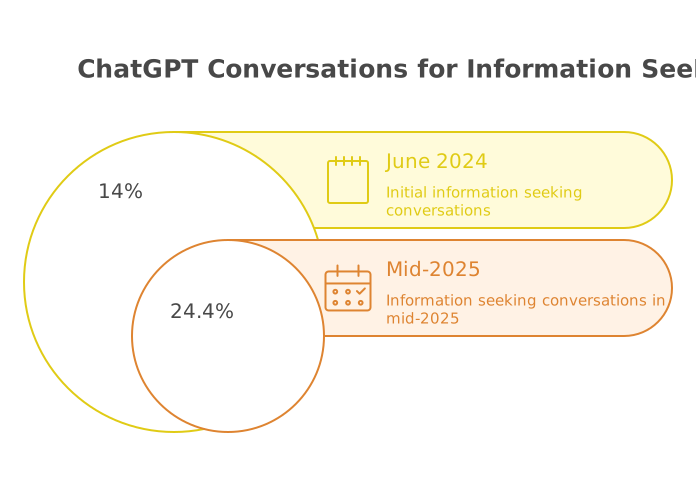
The way people engage with ChatGPT is also evolving meaningfully. Information-seeking has grown steadily, rising from 14% of conversations in June 2024 to nearly 24.4% by mid-2025.
People are increasingly going to AI not just to complete tasks, but to understand, to explore options, and to make more informed decisions. This is a notable shift. It suggests that users are beginning to treat AI less like a shortcut and more like a thinking partner.
From new tool to everyday tool
In examining the history of ChatGPT adoption, the paper takes readers on a journey from its initial launch in late 2022 until mid-2025, shedding light on the transition of conversational AI from an experimental technology to one that is indispensable and central to AI adoption trends. What started as a novel technology that sparked interest among early adopters now serves as a tool that millions use in their everyday lives and workplaces.
From a business perspective, the lesson could be simply stated; the time for artificial intelligence has come. This technology has already begun shaping human behavior, decision-making, and actions in many ways, and much of its impact remains undocumented, as seen across current AI adoption trends.
The takeaway
AI adoption is no longer a question it’s already happening at scale. The real challenge now is how quickly organizations can move from awareness to action without wasting time or budget.
That’s where GoML’s AI Matic helps, offering ready LLM Accelerators across use cases like agents, workflows, content, and analytics so teams can deploy and go live much faster. Understanding usage and AI adoption trends is step one acting on it is what matters next. Reach out to our AI experts at GoML to learn more.